Logb grammar
A BNF description of the Logb wire format, version 0.1. Normative text is the specification; this is the same bytes stated as a grammar, for anyone writing a parser.
Notation
<x>          nonterminal
"..."        literal bytes, hex
x*           zero or more
x+           one or more
[ x ]        optional
x | y        alternative
x{n}         exactly n repetitions
(* ... *)    comment
Terminals are fixed-width little-endian integers unless stated otherwise:
<u8>  <i8>   1 byte
<u16>        2 bytes, little-endian
<u32>        4 bytes, little-endian
<u64> <i64>  8 bytes, little-endian
<f64>        8 bytes, IEEE 754 binary64, little-endian
<byte>       1 uninterpreted byte
Two composite terminals recur everywhere:
<string>   ::= <u32> <byte>{n}        (* n = the u32; UTF-8, not NUL-terminated *)
<kv>       ::= <u32> <kv-pair>{n}     (* n = the u32; keys sorted, §wire.go *)
<kv-pair>  ::= <string> <string>      (* key, value *)
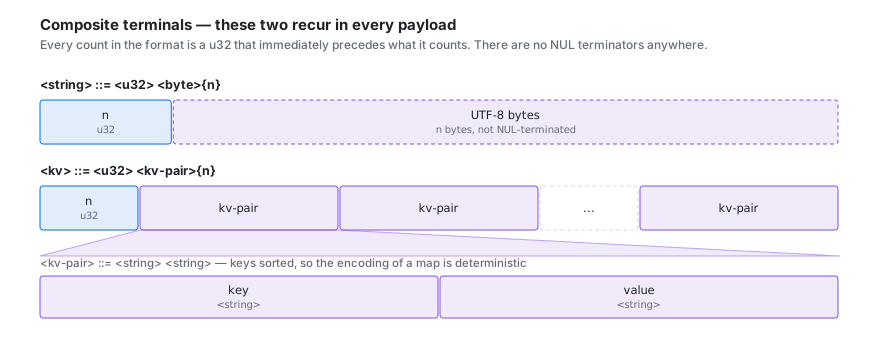
Grammar alone cannot state the length and cross-reference constraints; those are listed under Context conditions and a conforming reader enforces them.
File
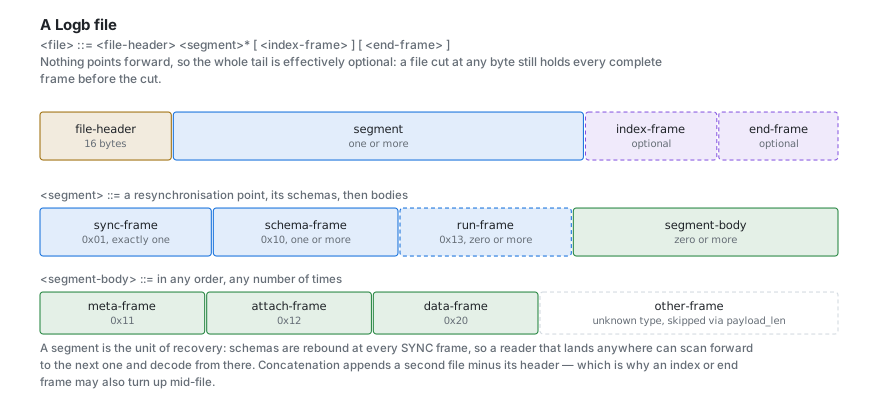
<file> ::= <file-header> <segment>* [ <index-frame> ] [ <end-frame> ]
<segment> ::= <sync-frame> <schema-frame>+ <run-frame> <segment-body>
<segment-body> ::= <meta-frame> | <attach-frame> | <data-frame>
A file truncated at any byte is a valid file containing every complete frame before the cut (rule 2), so every construct above is effectively optional at the tail. Concatenation appends a second file minus its `<file-header>`, which means `<index-frame>` and `<end-frame>` may also appear between segments.
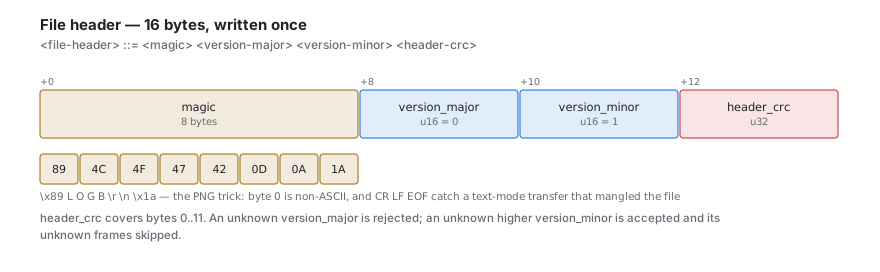
<file-header> ::= <magic> <version-major> <version-minor> <header-crc>
<magic> ::= "89 4C 4F 47 42 0D 0A 1A" ( \x89 L O G B \r \n \x1a ) <version-major> ::= <u16> ( 0 ) <version-minor> ::= <u16> ( 1 ) <header-crc> ::= <u32> ( crc32c of bytes 0..11 )
Frame
Every frame after the file header has one shape.
<frame> ::= <frame-header> <payload> <frame-crc>
<frame-header> ::= <payload-len> <frame-type> <flags> <stream-id> <payload-len> ::= <u32> ( bytes of payload only ) <frame-type> ::= <u8> <flags> ::= <u8> ( no flags defined in v0.1; write 0 ) <stream-id> ::= <u16> ( 0 if not stream-scoped ) <payload> ::= <byte>{payload_len} <frame-crc> ::= <u32> ( crc32c over frame-header and payload )
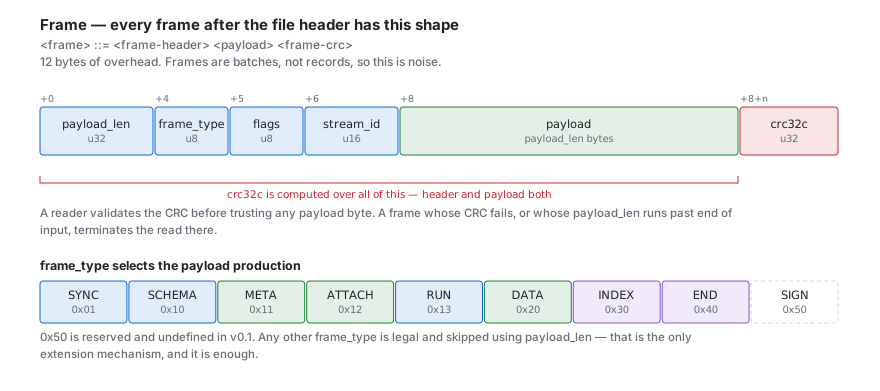
The frame type selects the payload production:
<sync-frame>   ::= <frame>   (* frame_type = 0x01, payload = <sync-payload>   *)
<schema-frame> ::= <frame>   (* frame_type = 0x10, payload = <schema-payload> *)
<meta-frame>   ::= <frame>   (* frame_type = 0x11, payload = <meta-payload>   *)
<attach-frame> ::= <frame>   (* frame_type = 0x12, payload = <attach-payload> *)
<run-frame>    ::= <frame>   (* frame_type = 0x13, payload = <run-payload>    *)
<data-frame>   ::= <frame>   (* frame_type = 0x20, payload = <data-payload>   *)
<index-frame>  ::= <frame>   (* frame_type = 0x30, payload = <index-payload>  *)
<end-frame>    ::= <frame>   (* frame_type = 0x40, payload is empty           *)
<sign-frame>   ::= <frame>   (* frame_type = 0x50, reserved, undefined in 0.1 *)
<other-frame>  ::= <frame>   (* any other frame_type: skipped via payload_len *)
Any frame type not listed is legal and skipped using `payload_len`; that is the only extension mechanism. A reader that skips one is still conforming, so `<other-frame>` may appear anywhere `<segment-body>` may.
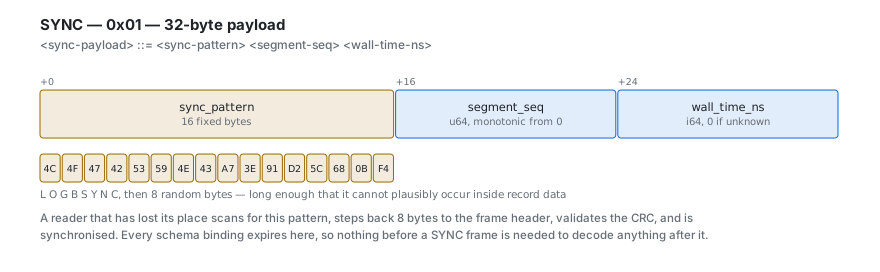
SYNC — 0x01
<sync-payload> ::= <sync-pattern> <segment-seq> <wall-time-ns>
<sync-pattern> ::= "4C 4F 47 42 53 59 4E 43 A7 3E 91 D2 5C 68 0B F4" <segment-seq> ::= <u64> ( monotonic from 0 ) <wall-time-ns> ::= <i64> ( wall clock at segment start, 0 if unknown )
SCHEMA — 0x10
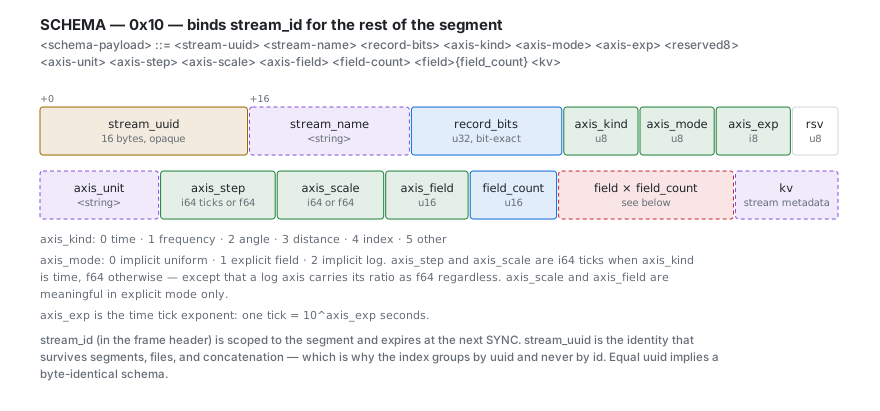
`stream_id` in the frame header binds this schema for the rest of the segment.
<schema-payload> ::= <stream-uuid> <stream-name> <record-bits>
                     <axis-kind> <axis-mode> <axis-exp> <reserved8>
                     <axis-unit> <axis-step> <axis-scale> <axis-field>
                     <field-count> <field>{field_count} <kv>
<stream-uuid> ::= <byte>{16} ( opaque; identity across segments and files ) <stream-name> ::= <string> <record-bits> ::= <u32> ( fixed portion of a record, bit-exact ) <axis-kind> ::= <u8> ( 0 time, 1 frequency, 2 angle, 3 distance, 4 index, 5 other ) <axis-mode> ::= <u8> ( 0 implicit uniform, 1 explicit field, 2 implicit log ) <axis-exp> ::= <i8> ( time only: tick = 10^axis_exp seconds ) <reserved8> ::= <u8> ( write 0 ) <axis-unit> ::= <string> ( "s", "Hz", "V", "deg" ) <axis-step> ::= <i64> | <f64> ( i64 ticks if axis_kind = time, else f64; the ratio, always f64, if axis_mode = 2 ) <axis-scale> ::= <i64> | <f64> ( explicit mode only; same rule ) <axis-field> ::= <u16> ( explicit mode only; index into fields ) <field-count> ::= <u16>
Field
<field> ::= <field-name> <bit-offset> <bit-width>
            <data-type> <byte-order> <field-flags>
            <unit> <desc> <conversion>
            [ <guard-field> <guard-value> ]     (* iff field_flags bit1 *)
            <kv>
<field-name> ::= <string> <bit-offset> ::= <u32> ( from start of record; numbering follows byte_order ) <bit-width> ::= <u32> ( 0 for a variable-length field ) <data-type> ::= <u8> ( 0 uint, 1 sint, 2 float, 3 bool, 4 bytes, 5 string, 6 complex ) <byte-order> ::= <u8> ( 0 little, 1 big ) <field-flags> ::= <u8> ( bit0 variable-length (tail), bit1 guarded ) <unit> ::= <string> <desc> ::= <string> <guard-field> ::= <u16> ( index into fields of this schema ) <guard-value> ::= <u64> ( raw value, compared before conversion )
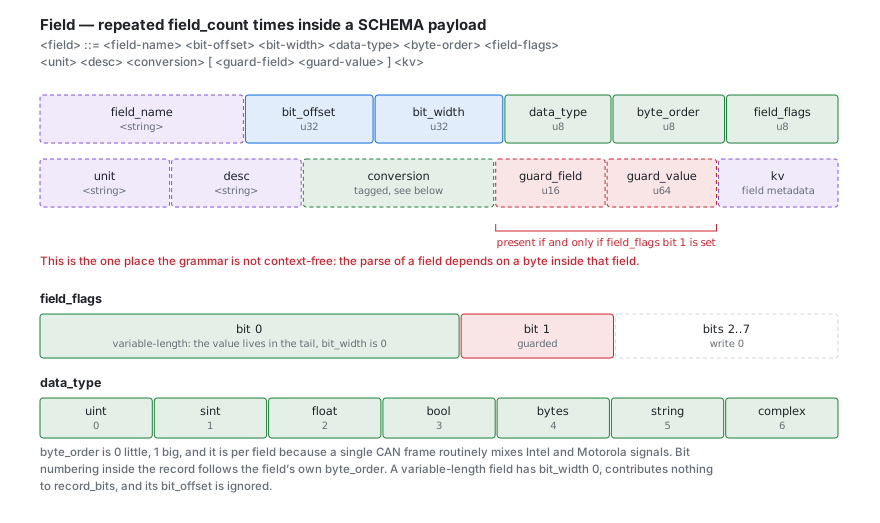
The optional `<guard-field> <guard-value>` pair is present in the byte stream if and only if bit 1 of `<field-flags>` is set. This is the one place the grammar is not context-free: the parse of a field depends on a byte inside that field.
Conversion
A tagged struct: one type byte, then type-specific parameters.
<conversion> ::= <conv-identity> | <conv-linear> | <conv-rational>
               | <conv-table>    | <conv-table-interp>
               | <conv-v2t>      | <conv-r2t>
<conv-identity> ::= "00" <conv-linear> ::= "01" <f64> <f64> ( a, b -> a + bx ) <conv-rational> ::= "02" <f64>{6} ( p1..p6 ) <conv-table> ::= "03" <table-body> ( lookup, no interpolation ) <conv-table-interp> ::= "04" <table-body> ( lookup, interpolated *) <conv-v2t> ::= "05" <u32> <v2t-entry>{n} <default> <conv-r2t> ::= "06" <u32> <r2t-entry>{n} <default>
<table-body> ::= <u32> <table-entry>{n} <table-entry> ::= <f64> <f64> ( key, val ) <v2t-entry> ::= <f64> <string> ( key, text ) <r2t-entry> ::= <f64> <f64> <string> ( lo, hi, text ) <default> ::= <string>
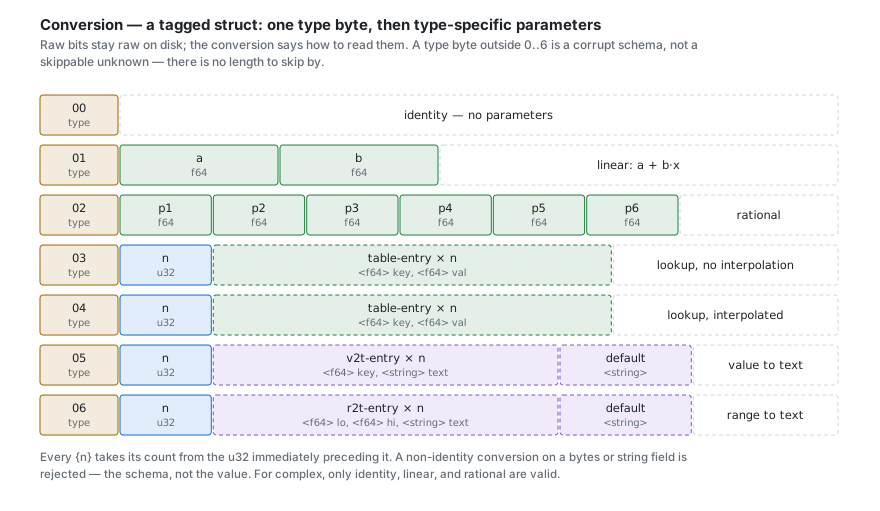
Every `{n}` above takes its count from the `<u32>` immediately preceding it. A conversion type byte outside 0..6 is a corrupt schema, not a skippable unknown: there is no length to skip by.
META — 0x11
<meta-payload> ::= <string> <string> (* key, value; one pair per frame *)
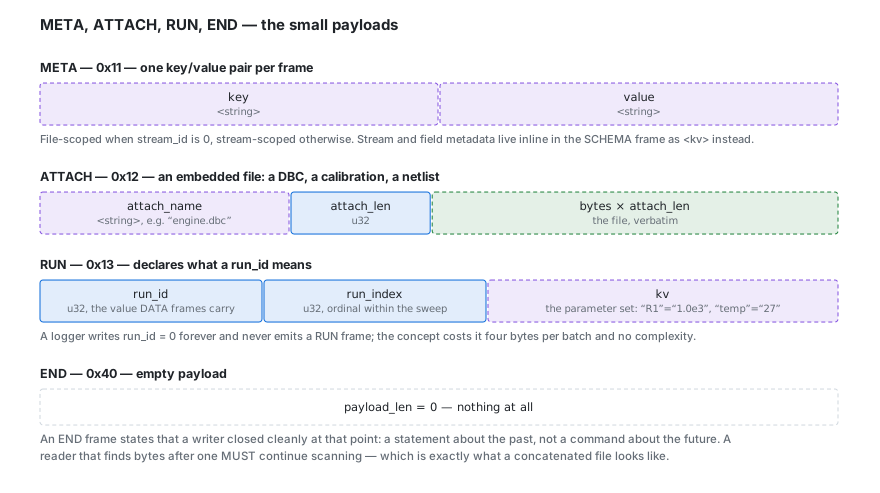
The diagram above also covers ATTACH, RUN and END.
File-scoped when `stream_id` is 0, stream-scoped otherwise. Stream and field metadata live inline in the SCHEMA frame as `<kv>` instead.
ATTACH — 0x12
<attach-payload> ::= <attach-name> <attach-len> <byte>{attach_len}
<attach-name> ::= <string> ( e.g. "engine.dbc" ) <attach-len> ::= <u32>
RUN — 0x13
<run-payload> ::= <run-id> <run-index> <kv>
<run-id> ::= <u32> ( the value DATA frames carry ) <run-index> ::= <u32> ( ordinal within the sweep )
The `<kv>` is the run's parameter set: `"R1"="1.0e3"`, `"temp"="27"`.
DATA — 0x20
<data-payload> ::= <axis-base> <record-count> <run-id> <codec> <filter>
                   <reserved16> <raw-size> <records>
<axis-base> ::= <i64> | <f64> ( i64 ticks if axis_kind = time, else f64 ) <record-count> ::= <u32> <run-id> ::= <u32> ( 0 if the stream has no runs ) <codec> ::= <u8> ( 0 none, 1 zstd, 2 lz4, 3 deflate ) <filter> ::= <u8> ( 0 none, 1 transpose ) <reserved16> ::= <u16> ( write 0 ) <raw-size> ::= <u64> ( payload size after decode ) <records> ::= <byte> ( to end of payload; codec- and filter-encoded <record-region> *)
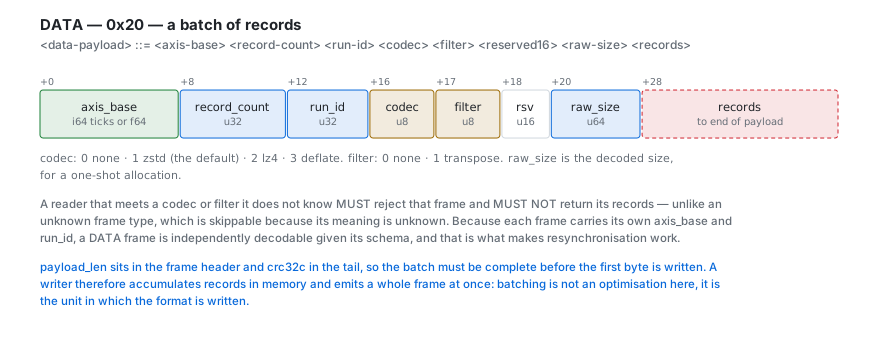
After decompression and de-transposition, the region is:
<record-region> ::= <fixed>{record_count} <tail>{record_count}
<fixed> ::= <byte>{ceil(record_bits / 8)} <tail> ::= <tail-value>{v} ( v = number of variable-length fields, in field-declaration order ) <tail-value> ::= <u32> <byte>{n}
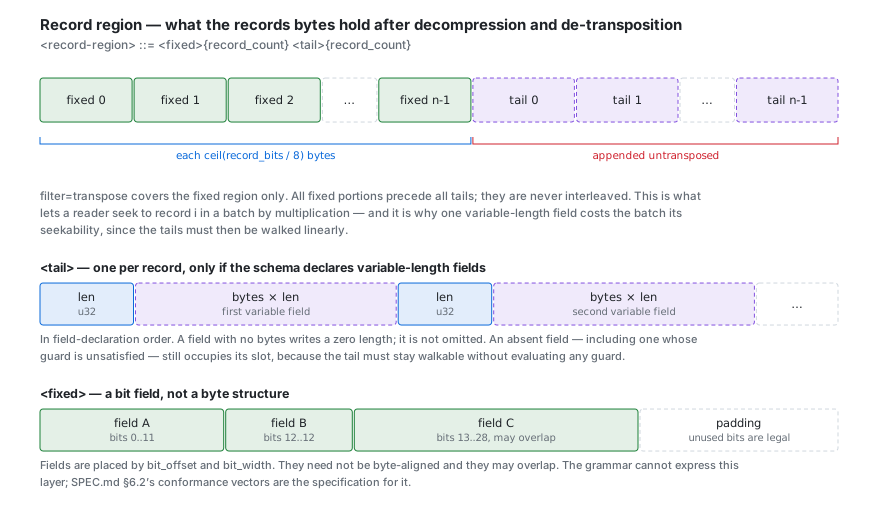
All fixed portions precede all tails; they are never interleaved. `filter = transpose` covers the fixed region only — the tail region is appended to it untransposed. A variable-length field that is absent, including one whose guard is unsatisfied, writes a zero length and is not omitted.
The fixed portion is a bit field, not a byte structure: `<field>` positions are `bit_offset`/`bit_width` within it, they may overlap, and they need not be byte-aligned. The grammar cannot express that layer; §6.2's conformance vectors are the specification for it.
INDEX — 0x30
<index-payload> ::= <stream-count> <index-group>{stream_count}
<index-group> ::= <stream-uuid> <entry-count> <index-entry>{entry_count}
<stream-count> ::= <u32> <entry-count> ::= <u32> <index-entry> ::= <back-offset> <first-axis> <record-count> <run-id>
<back-offset> ::= <u64> ( bytes backwards from this frame's start ) <first-axis> ::= <i64> | <f64> ( per the stream's axis_kind )
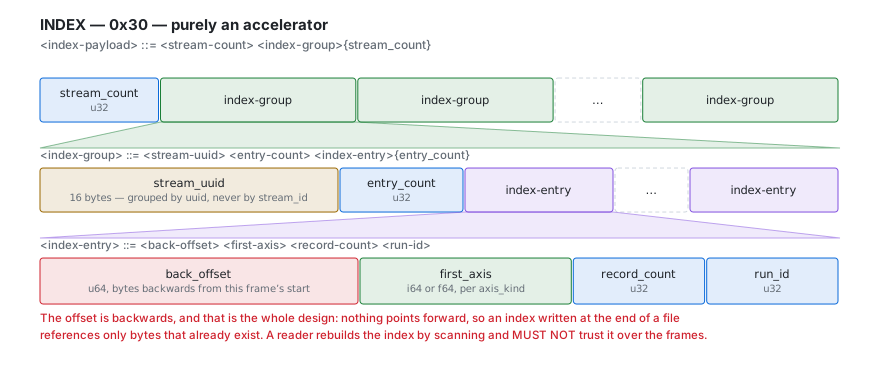
Grouped by `stream_uuid`, never by `stream_id`. Purely an accelerator: a reader rebuilds it by scanning and MUST NOT trust it over the frames.
END — 0x40
<end-payload> ::= (* empty *)
An END frame states that a writer closed cleanly at that point. It does not end the read: a reader that finds bytes after it continues scanning, which is what a concatenated file looks like.
Context conditions
The grammar admits byte sequences the format does not. A conforming reader checks, and rejects:
Framing
- `crc32c` over each frame's header and payload matches `<frame-crc>`; a
mismatch, or a `payload_len` running past end of input, terminates the read.
- `version_major` is known. An unknown higher `version_minor` is accepted.
Schema
- Within a segment, a `stream_id` carries exactly one schema. Across segments,
equal `stream_uuid` implies a byte-identical schema.
- `axis_mode = 2` (implicit log) with `axis_kind = 0` (time) is rejected; so is
`axis_base = 0`, or a ratio that is not finite, positive, and ≠ 1.
- An unknown `axis_mode` causes the stream to be skipped, not the file.
- `axis_field` indexes a declared field when `axis_mode = 1`.
Fields
- A `bytes` or `string` field with `field_flags` bit 0 clear is byte-aligned and
byte-sized; any other alignment is rejected.
- A variable-length field has `bit_width = 0` and contributes nothing to
`record_bits`; its `bit_offset` is ignored and should be 0.
- A non-identity conversion on a `bytes` or `string` field is rejected — the
schema, not the value.
- For `complex`, only `identity`, `linear`, and `rational` are valid; the table
and text conversions are rejected.
- `float` widths are 16, 32, or 64; `complex` is 64 or 128; `bool` is 1 bit;
`uint`/`sint` are 1..64 bits.
Guards
- `guard_field` indexes a field of this schema and is not the guarded field.
- The guard field is `uint`, `sint`, or `bool`; it is neither guarded itself nor
variable-length. Guards do not chain.
- All of this is decidable when the SCHEMA frame is read, so a violation rejects
the schema rather than a record.
- An unsatisfied guard means the field is absent. A reader returns no value —
not zero, not the underlying bits.
Data
- An unknown `codec` or `filter` rejects that frame; its records are not
returned. This differs from an unknown frame type, which is skipped.
- Within a segment, a stream's DATA frames are grouped by `run_id`: once it
changes, the previous value does not reappear before the next SYNC frame.